
AI Infrastructure Stocks Slide as Financing Costs Challenge Growth Valuations
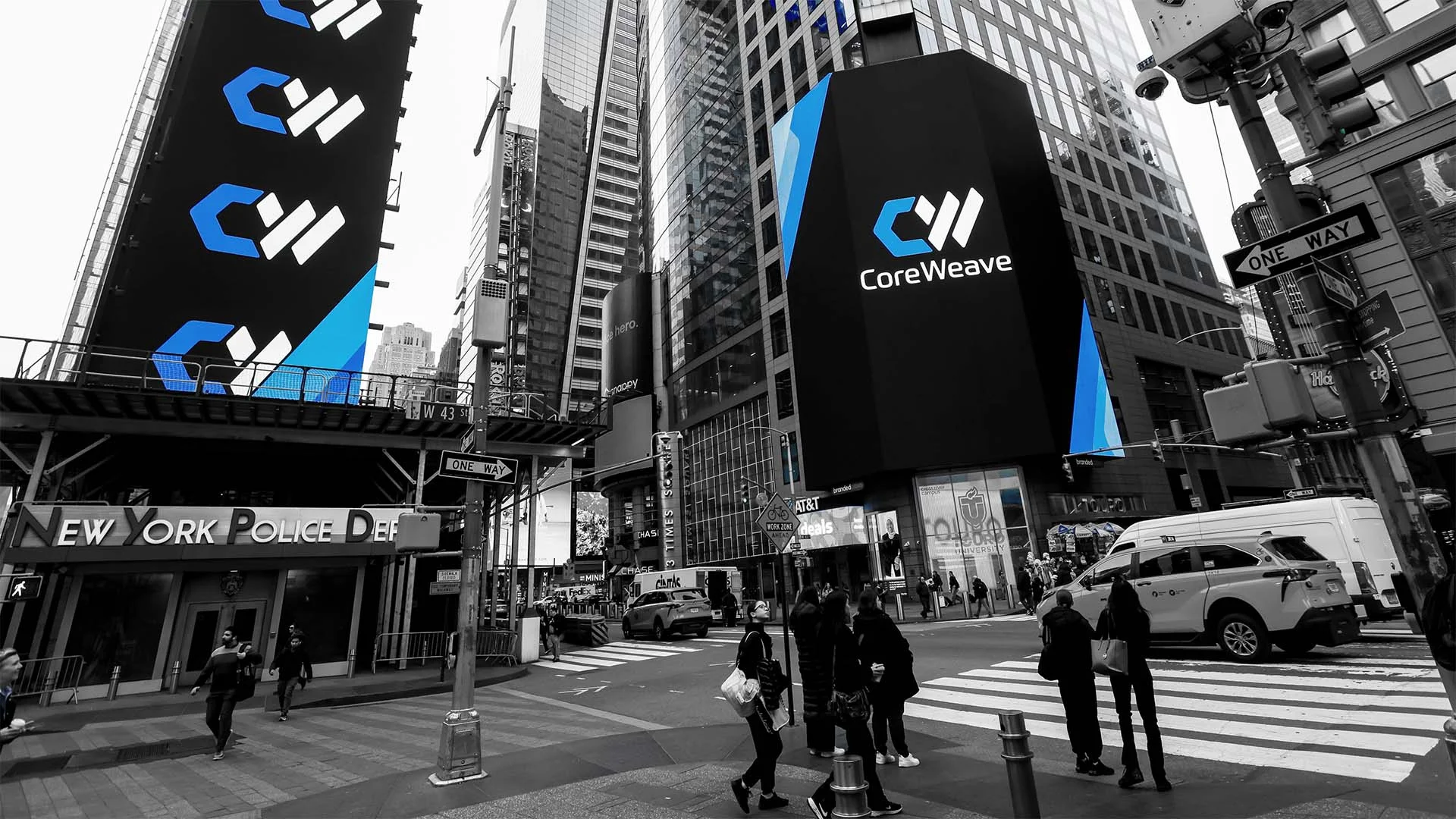
Artificial intelligence infrastructure stocks suffered a sharp selloff on October 14, 2026, as investors reassessed the financial sustainability of the industry’s capital-intensive expansion amid rising expectations for U.S. interest rates.
By approximately 2:34 p.m. Eastern Time, CoreWeave shares had fallen about 16%, while Nebius declined 11%, Oracle lost 9% and Dell Technologies dropped 11%, according to Reuters. Together, the declines erased approximately $80 billion in market capitalization.
The selling pressure reflected growing concern about the financial returns available from the industry’s expanding investment in data centers, advanced processors and cloud computing infrastructure.
The immediate market backdrop was stronger-than-expected U.S. inflation, which increased expectations for further monetary tightening and raised the cost-of-capital assumptions investors apply to highly capital-intensive businesses.
The central development, however, was the October 14 repricing of AI infrastructure equities.
Investors were reassessing whether companies undertaking enormous computing infrastructure commitments could generate sufficient cash flow to justify their financing requirements.
AI Infrastructure Equities Face a Broad Repricing
The decline extended across several segments of the AI computing ecosystem.
CoreWeave, a specialized cloud infrastructure provider, experienced one of the steepest losses. Nebius, another company focused on AI computing capacity, also came under significant pressure.
Oracle’s decline demonstrated that the reassessment extended to larger enterprise technology businesses making substantial infrastructure commitments.
Dell Technologies, which supplies computing equipment used in data-center environments, also fell sharply.
These companies have different financial structures, customer relationships and operating models. Their individual share-price movements cannot be attributed to identical causes.
Nevertheless, the simultaneous weakness indicated that investors were becoming more selective about the economics of AI infrastructure expansion.
The distinction is important.
Strong demand for computing capacity can support revenue growth, but it does not automatically guarantee that the companies supplying that capacity will earn attractive returns on invested capital.
Higher Borrowing Costs Challenge Infrastructure Economics
The October 14 selloff occurred as investors revised their expectations for U.S. monetary policy following the September inflation report.
Higher expected interest rates can affect AI infrastructure businesses through two principal mechanisms.
First, rising borrowing costs can increase the expense of financing new infrastructure projects.
Second, higher discount rates can reduce the present value of future earnings and cash flows, placing pressure on equity valuations.
Both mechanisms are particularly relevant for businesses that require substantial upfront capital expenditure.
Developing data centers involves investment in computing hardware, electrical systems, cooling infrastructure, networking equipment and physical facilities.
These expenditures frequently precede the full realization of customer revenue.
As financing costs increase, companies must generate greater operating cash flow to achieve the same financial return on their investments.
The resulting pressure is not uniform across the sector.
Businesses with substantial internally generated cash flow and strong balance sheets generally possess greater financing flexibility than companies relying heavily on external capital.
The October 14 market reaction therefore highlighted differences in financial resilience rather than establishing that all AI infrastructure providers face equivalent risks.
Credit Concerns Intensify Equity Market Pressure
Investor concern extended beyond the immediate decline in share prices.
Reuters reported that the cost of insuring debt against default for certain AI-related companies, including CoreWeave and Oracle, had reached record highs, according to S&P Global Market Intelligence data.
Credit-default-swap pricing is a market measure of the compensation investors demand for assuming credit risk. An increase indicates greater perceived risk, although it does not establish that a borrower will default.
The deterioration in credit sentiment matters because many AI infrastructure projects depend on substantial financing commitments.
Companies must fund the acquisition of expensive equipment and the construction of facilities while managing debt service, customer obligations and operating expenses.
A higher market-implied credit risk premium can complicate future borrowing and refinancing, even when existing fixed-rate debt retains its original contractual interest payments.
The October 14 equity selloff reflected investor concern about how those financing conditions could affect future returns.
For institutional investors, the interaction between equity valuations and credit-market sentiment provides an important measure of the industry’s financial vulnerability.
Computing Demand Does Not Guarantee Attractive Returns
The commercial demand for AI computing remains a powerful incentive for infrastructure investment.
Advanced AI systems require specialized processing capacity, extensive networking infrastructure and substantial data-center resources.
However, the economic value of providing that capacity depends on more than the volume of customer demand.
Infrastructure providers must earn sufficient revenue to cover equipment costs, financing expenses, depreciation, energy consumption and other operating requirements.
They must also manage the risk that technological advances reduce the competitiveness of existing computing equipment before the associated investment has been fully recovered.
Long-term customer commitments can improve revenue visibility, but their economic value depends on contract pricing, duration, utilization and the relationship between expected revenue and financing obligations.
These considerations are especially important when companies commit capital over long periods while the underlying technology and competitive environment continue to evolve.
The October 14 selloff demonstrated that investors were increasingly scrutinizing the financial relationship between infrastructure spending and sustainable cash generation.
It did not establish that demand for AI computing had materially weakened.
Instead, it showed that expectations for rapid growth were no longer sufficient to insulate infrastructure valuations from concerns about capital efficiency and financing costs.
Financial Discipline Becomes a Competitive Differentiator
The market reaction also underscored an increasingly important distinction among AI infrastructure companies.
The ability to expand computing capacity rapidly is commercially valuable, but the ability to finance that expansion efficiently may become equally consequential.
Companies with stronger balance sheets, favorable funding arrangements and durable customer contracts may be better positioned to absorb higher borrowing costs.
Providers with greater dependence on external financing may face more demanding investment economics.
These differences can influence future capital expenditure decisions, the pace of infrastructure deployment and the returns available to shareholders.
The October 14 declines do not prove that an industry-wide investment contraction is underway.
They indicate that investors are assigning greater importance to the financial sustainability of expansion plans.
Artificial Intelligence: The Cost of Capital Reshapes the Investment Case
The October 14 selloff marked a significant reassessment of financial risk across AI infrastructure equities.
CoreWeave, Nebius, Oracle and Dell experienced substantial declines as investors evaluated the implications of higher interest rates and increasingly demanding financing conditions.
The approximately $80 billion reduction in their combined market capitalization reflected the scale of the repricing during the afternoon session.
The event does not establish that artificial intelligence infrastructure demand is structurally weakening or that the industry’s expansion has reached its limit.
It demonstrates that commercial growth and financial value creation must be assessed separately.
For institutional investors, the central question is whether companies can convert rising demand for computing capacity into sustainable cash flow and returns that adequately compensate for the capital committed.
As financing conditions become less favorable, balance-sheet strength, capital efficiency and the durability of operating cash flows are likely to play a greater role in differentiating the industry’s long-term winners.
The October 14 market reaction underscores that AI infrastructure investment is increasingly being judged not only by the scale of its growth ambitions, but by the economics required to sustain them.
Important Information
This material was prepared by Wavelength Financial Content, an independent third-party content provider, and is published with the authorization of Quassar Capital, L.P. ("Quassar Capital"). Opinions expressed are as of the date of publication and are subject to change without notice. They do not necessarily reflect the views of Quassar Capital or its affiliates.
This material is provided for informational purposes only. It is not investment, legal, or tax advice, a recommendation to take any action or make any investment decision, or an offer to sell or a solicitation of an offer to purchase any security, financial product, or interest in an investment vehicle. Forward-looking statements, forecasts, and estimates are illustrative, subject to risks and uncertainties, and may not be realized. Past performance is not indicative of future results.
Information has been obtained from sources believed to be reliable but has not been independently verified, and no representation or warranty is made as to its accuracy or completeness. References to third-party companies, products, or trademarks are for identification only and do not imply sponsorship, affiliation, or endorsement. See the Disclosures and Terms of Use pages on this website for additional information.
© 2026 Quassar Capital, L.P. All rights reserved. Reproduction or distribution of this material, in whole or in part, is prohibited without the prior written consent of Quassar Capital.