
Nvidia Opens Independent Board Investigation Into Reported Foreign Intelligence Effort Targeting Jensen Huang
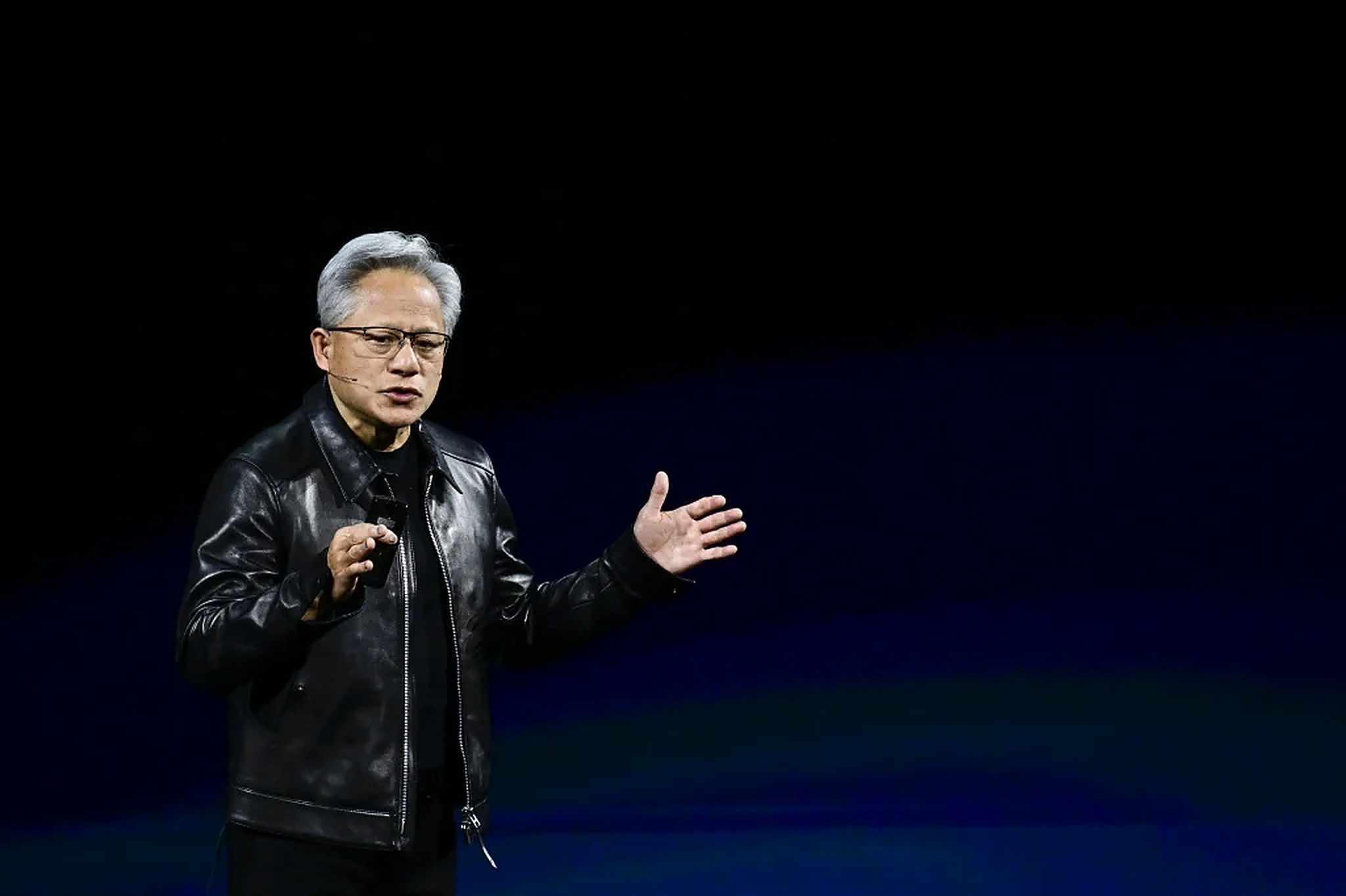
Nvidia (Nasdaq: NVDA) announced on November 8, 2026, that its board of directors had initiated an independent investigation following reports that founder and chief executive Jensen Huang was targeted by a foreign intelligence effort.
The investigation will be overseen by a committee of independent directors assisted by outside legal counsel. Nvidia stated that its board has no reason to believe either U.S. national security or the company’s proprietary information was compromised. Huang has committed to cooperating with the review, and the board has reaffirmed its confidence in his leadership.
The announcement introduces a significant corporate governance question at a company whose advanced computing technologies occupy a central position in global artificial intelligence infrastructure.
The material issue is not whether the reported allegations have been established. They have not. It is how Nvidia’s board assesses potential exposure involving its chief executive, safeguards sensitive information and maintains institutional oversight while the facts are examined.
Independent Oversight and the Scope of the Investigation
Nvidia’s decision to initiate an independent review establishes a formal process for examining the circumstances described in recent reporting.
The inquiry follows allegations involving Huang’s relationship with a business executive whom U.S. authorities reportedly suspected of gathering intelligence for China.
Reuters and Associated Press have reported on the allegations and Huang’s acknowledgment of a personal relationship. Those reports provide context for the board’s decision but do not establish that Huang knowingly participated in intelligence activity or disclosed protected information.
Nvidia’s official statement does not identify a security breach, announce disciplinary measures or report findings of misconduct.
The distinction is essential.
An investigation is a mechanism for establishing facts and assessing potential exposure. Its initiation should not be interpreted as confirmation of the allegations that prompted it.
By assigning oversight to independent directors and outside counsel, Nvidia has separated the review from ordinary executive management.
That structure is particularly relevant when the subject of reported concerns is the company’s chief executive. Independent oversight can help the board evaluate sensitive information, identify potential conflicts and determine whether additional governance measures are warranted.
Nvidia has not announced a completion date or disclosed the investigation’s detailed procedures.
Consequently, the scope of any eventual findings and their implications for the company remain uncertain.
Executive Leadership and Institutional Continuity
The investigation draws attention to Nvidia’s dependence on the leadership of Jensen Huang, who co-founded the company in 1993 and has remained its chief executive throughout its development.
Under Huang, Nvidia expanded from graphics processing into accelerated computing, software platforms and infrastructure supporting advanced AI systems.
His influence extends across technology strategy, product development, customer relationships and the company’s engagement with governments and other major institutions.
This concentration of leadership creates a governance consideration distinct from the underlying allegations.
For founder-led technology companies, executive continuity can be particularly important when strategic direction, commercial relationships and organizational knowledge are closely associated with one individual.
The relevant institutional questions concern the resilience of decision-making processes, the independence of board oversight and the company’s capacity to maintain operational continuity under heightened scrutiny.
Nvidia’s board has reaffirmed its confidence in Huang, and the company has not announced a leadership transition.
Those facts constrain any interpretation that an executive departure is imminent.
Nevertheless, the review places greater attention on the mechanisms through which the board supervises executive conduct and protects the continuity of a business with substantial strategic and technological responsibilities.
Sensitive AI Technology and National Security Exposure
The potential significance of the reported intelligence concerns is amplified by Nvidia’s position in advanced computing.
The company’s processors, networking technologies and software ecosystem support the training and deployment of increasingly sophisticated AI models.
These technologies are commercially important and have become central to national-security considerations as governments seek to control access to advanced computing capabilities.
U.S. export restrictions already apply to certain advanced semiconductor products and transactions involving China.
Within that environment, potential foreign intelligence activity directed at a senior technology executive raises questions about the protection of proprietary information and the management of sensitive business relationships.
However, the existence of an intelligence-related allegation does not establish a violation of export-control rules, unauthorized disclosure or compromise of protected technology.
Nvidia has explicitly stated that its board has no reason to believe national security or company secrets were compromised.
That statement represents the company’s assessment at the time of the announcement, not a final finding from the independent investigation.
Any subsequent regulatory or operational consequences would depend on evidence established through the review and the actions, if any, taken by the relevant authorities.
Until such findings emerge, the appropriate distinction is between potential exposure and demonstrated harm.
Governance Risk and Financial Materiality
For Nvidia, the financial significance of the investigation depends on whether it produces consequences that affect the company’s operating capabilities, strategic relationships or governance arrangements.
An independently supervised inquiry can create uncertainty without necessarily impairing business performance.
Potential transmission channels include additional compliance requirements, management distraction, changes in internal oversight procedures or heightened scrutiny of relationships involving sensitive technologies.
These are possible outcomes rather than confirmed developments.
A material financial effect would require a more specific connection between the investigation’s findings and the company’s commercial or operational position.
For example, evidence requiring changes to information-security controls, executive responsibilities or interactions with regulators could carry consequences for costs, execution or corporate governance.
Conversely, a review that identifies no material compromise or governance deficiency could substantially narrow the uncertainty introduced by the announcement.
The distinction between reputational concern and measurable financial impairment is therefore central to evaluating the event.
Nvidia’s board has established an independent process while maintaining support for its current leadership. Neither action establishes the eventual outcome of the investigation.
The relevant indicators will be the findings disclosed, any corrective measures adopted and whether the review results in changes affecting the company’s ability to execute its technology and commercial strategy.
Artificial Intelligence: Independent Oversight at a Strategically Important Company
Nvidia’s decision to investigate reports of a foreign intelligence effort targeting Jensen Huang brings corporate governance into focus at a company central to advanced AI computing.
The event is significant because it combines three institutional considerations: concentrated executive leadership, the sensitivity of advanced semiconductor technology and the board’s responsibility to assess potential security exposure independently.
The company has established a formal review process and reaffirmed its confidence in Huang. It has also stated that it has no reason to believe national security or proprietary information was compromised.
Those confirmed facts establish the current boundaries of the event.
The investigation has not produced publicly disclosed findings demonstrating wrongdoing, a security breach or an operational disruption.
Its eventual financial significance will depend on whether the review identifies material deficiencies, requires changes to governance or security procedures, or affects Nvidia’s strategic and commercial relationships.
Until those questions are resolved, the development represents a governance and oversight issue with potential financial consequences, rather than evidence of established harm to Nvidia’s technology or business.
The central consideration is whether the independent review confirms the adequacy of existing safeguards or reveals circumstances requiring a substantive corporate response.
Important Information
This material was prepared by Wavelength Financial Content, an independent third-party content provider, and is published with the authorization of Quassar Capital, L.P. ("Quassar Capital"). Opinions expressed are as of the date of publication and are subject to change without notice. They do not necessarily reflect the views of Quassar Capital or its affiliates.
This material is provided for informational purposes only. It is not investment, legal, or tax advice, a recommendation to take any action or make any investment decision, or an offer to sell or a solicitation of an offer to purchase any security, financial product, or interest in an investment vehicle. Forward-looking statements, forecasts, and estimates are illustrative, subject to risks and uncertainties, and may not be realized. Past performance is not indicative of future results.
Information has been obtained from sources believed to be reliable but has not been independently verified, and no representation or warranty is made as to its accuracy or completeness. References to third-party companies, products, or trademarks are for identification only and do not imply sponsorship, affiliation, or endorsement. See the Disclosures and Terms of Use pages on this website for additional information.
© 2026 Quassar Capital, L.P. All rights reserved. Reproduction or distribution of this material, in whole or in part, is prohibited without the prior written consent of Quassar Capital.