
MasTec’s $1.25 Billion Murphy Acquisition Raises a Bigger Question About Capital Allocation
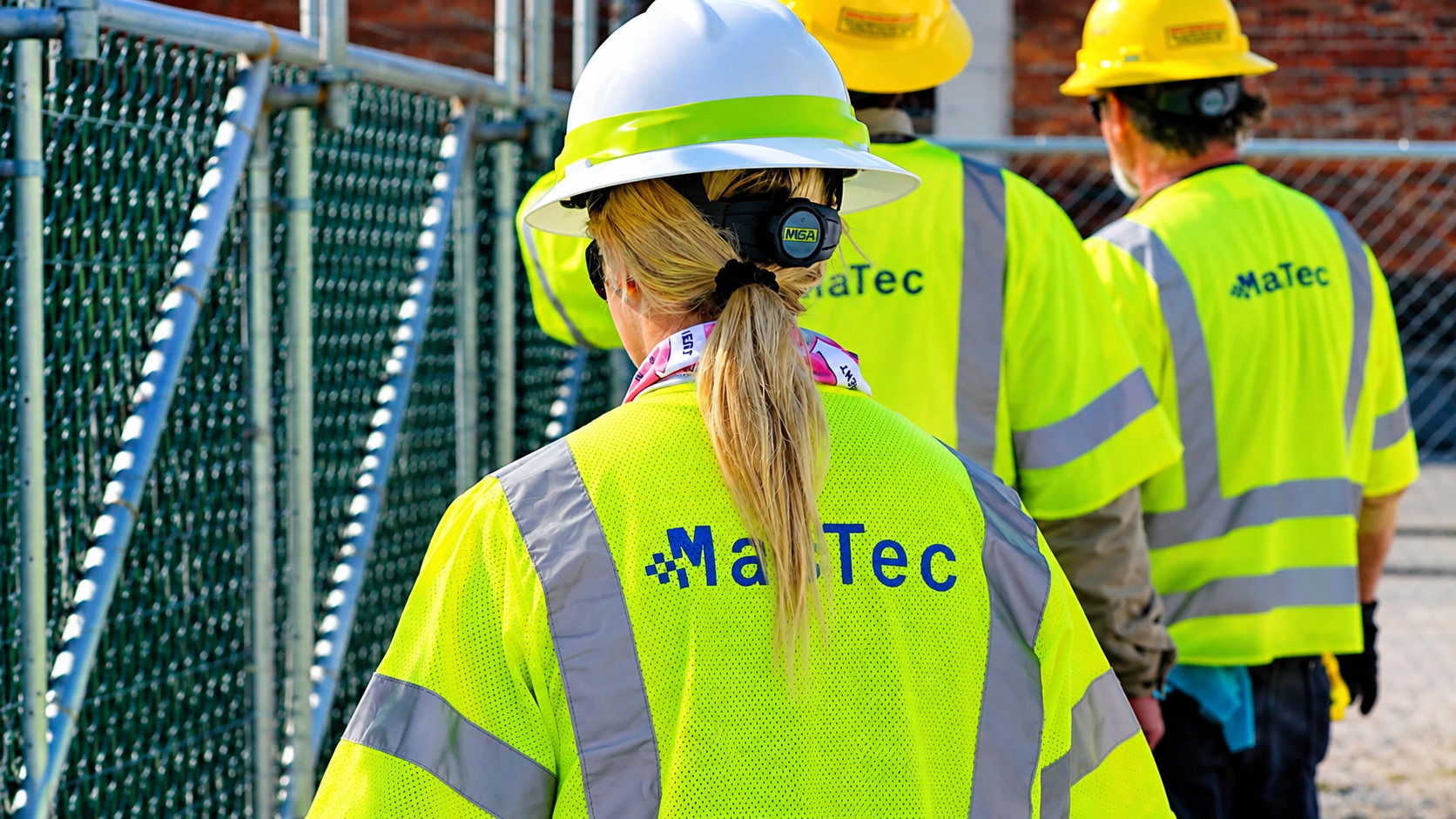
MasTec, Inc. (NYSE: MTZ) announced on November 20, 2026, a definitive agreement to acquire Murphy Corporation for approximately $1.25 billion in cash, expanding its capabilities across mechanical construction, industrial infrastructure, and facility maintenance.
The transaction provides MasTec with a larger presence in markets including data centers, healthcare, pharmaceutical manufacturing, aviation, defense, and advanced manufacturing. It also adds a substantial mechanical services platform that could extend the company’s participation beyond initial infrastructure construction into the ongoing operation and maintenance of critical facilities.
The strategic rationale is straightforward. The financial and capital allocation implications are less so.
On November 5, MasTec announced that it was suspending late-stage negotiations on a separate large acquisition opportunity to prioritize share repurchases. Fifteen days later, the company committed to another substantial acquisition, financed through a bank term loan.
That sequence introduces an important dimension to the transaction: the question is not simply whether Murphy strengthens MasTec’s operating platform, but whether the acquisition represents a sufficiently attractive use of capital relative to the alternatives available to the company.
A Strategic Expansion Into Mission-Critical Infrastructure
Founded in 1907, Murphy is a family-owned mechanical contractor with more than 119 years of operating history.
The company employs approximately 1,600 people, including 1,200 union craft professionals, and provides mechanical, plumbing, and process infrastructure services across a diversified range of commercial, industrial, and institutional markets.
Its capabilities include engineering, preconstruction, prefabrication, building information modeling, mechanical construction, and ongoing facility maintenance.
Murphy’s customer exposure spans data centers and technology, healthcare, pharmaceutical manufacturing, aviation and defense, food processing, refrigeration, and advanced manufacturing.
For MasTec, the acquisition adds capabilities that complement its existing infrastructure businesses in communications, power delivery, pipeline infrastructure, and clean energy and infrastructure.
The strategic relevance extends beyond the addition of another construction contractor.
Complex facilities increasingly require coordinated infrastructure systems, specialized engineering, mechanical installations, and ongoing technical services. Having a broader range of capabilities can improve a contractor’s ability to pursue larger projects and deepen relationships with existing customers.
Murphy’s engineering, prefabrication, and self-perform capabilities are particularly relevant because they can support construction productivity, scheduling, and execution quality.
These capabilities may also strengthen MasTec’s competitive positioning when pursuing projects that require coordination across multiple infrastructure disciplines.
However, the value of this expansion will depend on whether the combined organization can translate a broader technical offering into incremental business, improved execution, and sustainable financial returns.
The November 5 Decision Changes the Capital Allocation Narrative
The most important context surrounding the acquisition is MasTec’s announcement on November 5.
At that time, the company disclosed that it was suspending late-stage negotiations on a large potentially accretive acquisition opportunity in order to prioritize share repurchases.
That announcement communicated a specific capital allocation preference: management was prepared to favor returning capital to shareholders over pursuing a substantial external transaction.
The November 20 agreement with Murphy introduces a different allocation decision.
Rather than prioritizing repurchases, MasTec is committing approximately $1.25 billion in cash consideration to acquire another operating business.
The two announcements do not necessarily establish inconsistency or poor capital discipline. The earlier opportunity and Murphy may have differed materially in strategic fit, valuation, risk, financing requirements, or expected returns.
Nevertheless, the change warrants scrutiny.
Share repurchases and acquisitions compete for financial resources, even when they serve different corporate objectives.
A repurchase can create shareholder value when shares are acquired below their intrinsic value and the company retains sufficient financial flexibility. An acquisition can create value when the expected returns exceed the cost of capital and the risks associated with integration and financing.
Neither alternative is inherently superior.
The relevant question is whether the expected economic return from Murphy exceeds the return MasTec could reasonably have achieved through alternative uses of capital.
The company has presented a clear strategic rationale for the transaction, but its announcement does not provide sufficient information to establish that comparison independently.
That distinction is central to evaluating the acquisition as a capital allocation decision rather than simply accepting management’s strategic explanation.
The Economics of the Transaction
MasTec agreed to acquire Murphy for approximately $1.25 billion in cash, subject to customary purchase price adjustments.
The agreement also includes a potential earnout based on Murphy’s cumulative financial performance during the three years following closing.
Murphy is projected to generate approximately $775 million in calendar-year 2026 revenue and $140 million in adjusted EBITDA.
These projections indicate a substantial operating business with an established customer base and exposure to several infrastructure end markets.
However, projected revenue and adjusted EBITDA should not be treated as realized financial results.
The distinction is especially important because the transaction’s ultimate economic value will depend on the cash generated after operating expenses, taxes, working-capital requirements, capital expenditures, and financing costs.
Adjusted EBITDA provides an indication of operating performance, but it does not measure the cash available to repay acquisition financing or fund future growth.
The potential earnout also introduces a performance-linked component to the purchase consideration.
Its economic significance will depend on the contractual performance thresholds and the extent to which Murphy achieves the conditions required for additional payments.
Consequently, the $1.25 billion headline consideration should not automatically be treated as the transaction’s final maximum economic cost.
Financing and Balance-Sheet Implications
MasTec arranged a bank term loan to finance the transaction.
The company estimated that its pro forma net leverage would be approximately 2.7 times as of September 30, 2026, following the acquisition.
Management expects further deleveraging to reduce net leverage below 2.0 times during calendar year 2027.
That objective is an important part of the transaction’s financial rationale.
An acquisition can increase earnings and operating cash flow while simultaneously reducing financial flexibility through additional debt.
The two outcomes are not mutually exclusive.
For MasTec, the challenge will be to generate sufficient cash from the combined business to support debt reduction while continuing to fund operations, working capital, and other infrastructure opportunities.
The quality of that cash generation will matter more than the headline increase in adjusted EBITDA.
Infrastructure construction businesses can experience substantial fluctuations in working-capital requirements as projects advance through procurement, execution, billing, and collection.
Labor availability, project delays, cost overruns, and customer payment schedules can also affect the timing and predictability of cash flows.
Murphy’s recurring service and maintenance activities may provide a complementary source of revenue, but their actual contribution to cash-flow stability will need to be demonstrated through subsequent financial reporting.
The projected reduction in leverage therefore remains a management objective rather than an established outcome.
Recurring Services Extend the Investment Rationale
One of the more attractive elements of the acquisition is Murphy’s existing service and maintenance business.
Beyond large-scale construction, Murphy provides HVAC, plumbing, refrigeration, controls, and other mechanical services to operating facilities.
This creates an opportunity to participate in the continuing operational requirements of infrastructure assets after construction has been completed.
Data centers are particularly relevant.
The expansion of computing infrastructure creates demand not only for new facilities but also for the mechanical systems, cooling infrastructure, and ongoing maintenance required to keep those facilities operational.
Murphy’s existing relationships and technical capabilities could provide MasTec with a platform to pursue additional service contracts as the installed base of operational facilities expands.
The economics of recurring services can differ materially from those of project-based construction.
Construction revenue depends on contract awards, project schedules, completion milestones, and execution. Maintenance activities can generate repeat customer engagements and more continuous service requirements.
However, recurring revenue should not automatically be equated with higher profitability or predictable cash flow.
Contract duration, renewal rates, service margins, labor requirements, customer concentration, and working-capital characteristics ultimately determine the quality of those revenues.
MasTec has identified substantial growth opportunities in this area, but the financial contribution of those opportunities remains to be established.
Integration Risk and Operating Execution
Murphy brings approximately 1,600 employees and an established operating structure led by President and CEO Patrick Murphy, who is expected to remain in place.
Maintaining leadership continuity and technical expertise is important in a business where customer relationships, skilled labor, project execution, and operational knowledge represent significant competitive assets.
MasTec will need to preserve those capabilities while integrating Murphy into a larger corporate structure.
The challenges include maintaining workforce availability, coordinating procurement, managing project economics, aligning financial reporting, and ensuring that growth does not compromise execution quality.
The acquisition also adds exposure to a wider range of end markets and customer requirements.
That diversification may provide additional opportunities, but it does not eliminate the risks associated with project-based contracting.
Successful integration will therefore require more than financial consolidation. It will depend on preserving the operational characteristics that made Murphy strategically attractive in the first place.
The Market’s Response and the Burden of Proof
MasTec’s shares experienced significant selling pressure on the day of the announcement.
That market reaction is relevant, although it should not be interpreted as definitive evidence that investors rejected the acquisition itself.
The stock’s performance reflects the interaction of company-specific developments, broader market conditions, expectations, and investor positioning.
Nevertheless, the timing of the transaction, its financing requirements, and the company’s recent capital allocation announcement provide legitimate reasons for investors to examine management’s decisions more closely.
The acquisition must ultimately be evaluated against measurable outcomes.
These include the contribution of Murphy to consolidated revenue and adjusted EBITDA, the conversion of operating earnings into cash, the growth and profitability of recurring services, and progress toward the company’s leverage targets.
It will also be important to assess whether the combined business generates returns that justify the capital committed to the transaction.
Without those outcomes, strategic complementarity alone is insufficient to establish successful value creation.
What Will Determine Whether the Acquisition Creates Value
MasTec’s agreement with Murphy expands its capabilities in markets where technical complexity, specialized labor, and ongoing infrastructure requirements can create meaningful competitive advantages.
The transaction also offers exposure to a potentially attractive combination of project-based construction and recurring maintenance activities.
But the strategic benefits must be considered alongside the financing structure and the company’s recent shift in capital allocation priorities.
The November 5 decision to suspend another acquisition in favor of share repurchases makes the November 20 agreement particularly relevant to understanding management’s approach to deploying capital.
The two decisions raise a broader question about how MasTec evaluates competing opportunities and the financial returns required to justify them.
Ultimately, the acquisition will be judged on its ability to produce sustainable incremental cash flow, preserve financial flexibility, and generate returns commensurate with the capital invested.
Murphy strengthens MasTec’s operating platform.
Whether it strengthens shareholder value will depend on what the combined business delivers after the transaction closes.
Important Information
This material was prepared by Wavelength Financial Content, an independent third-party content provider, and is published with the authorization of Quassar Capital, L.P. ("Quassar Capital"). Opinions expressed are as of the date of publication and are subject to change without notice. They do not necessarily reflect the views of Quassar Capital or its affiliates.
This material is provided for informational purposes only. It is not investment, legal, or tax advice, a recommendation to take any action or make any investment decision, or an offer to sell or a solicitation of an offer to purchase any security, financial product, or interest in an investment vehicle. Forward-looking statements, forecasts, and estimates are illustrative, subject to risks and uncertainties, and may not be realized. Past performance is not indicative of future results.
Information has been obtained from sources believed to be reliable but has not been independently verified, and no representation or warranty is made as to its accuracy or completeness. References to third-party companies, products, or trademarks are for identification only and do not imply sponsorship, affiliation, or endorsement. See the Disclosures and Terms of Use pages on this website for additional information.
© 2026 Quassar Capital, L.P. All rights reserved. Reproduction or distribution of this material, in whole or in part, is prohibited without the prior written consent of Quassar Capital.