
Brent Hits Five-Month High as Saudi Attacks Renew Global Oil Supply Concerns
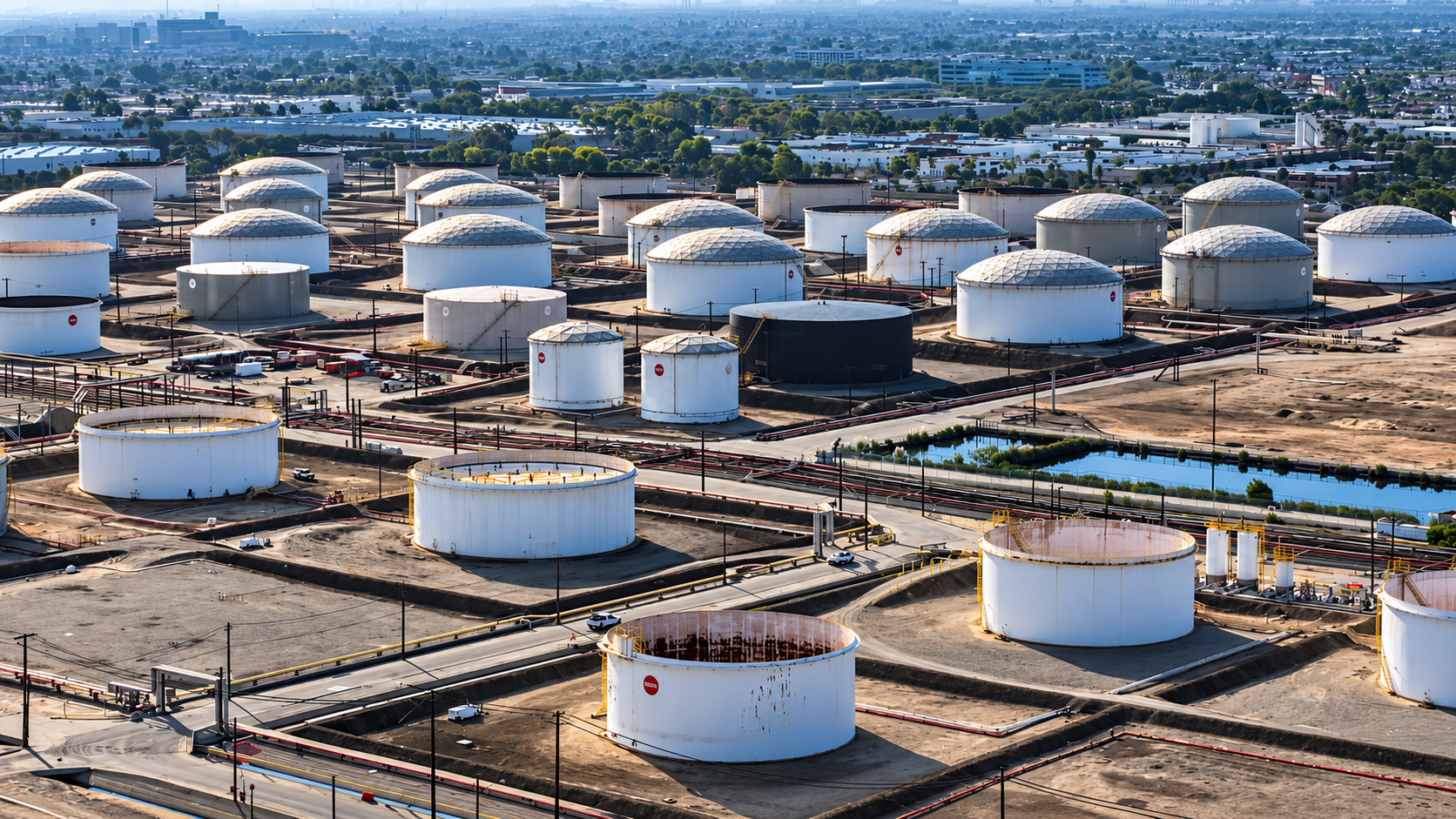
Brent crude reached a five-month high on October 23, 2026, as escalating attacks in Saudi Arabia renewed concerns about the security of Middle Eastern oil supplies and the potential for a sustained energy-driven inflation shock.
The international benchmark climbed to an intraday high of $115.16 a barrel, its highest level since May 4. At 9:00 a.m. Eastern Time, Brent futures were trading at $114.99, up 1.5%, while U.S. West Texas Intermediate crude rose 1.8% to $101.27, according to Reuters.
The advance followed intensified fighting involving Saudi Arabia and Yemen’s Houthi movement, including attacks affecting Saudi infrastructure. Saudi Aramco instructed employees to evacuate its headquarters in Dhahran on October 22 as security concerns increased.
The development has sharpened the distinction between geopolitical risk and actual supply disruption. Oil markets are pricing a greater possibility of interrupted production and transportation, but the evacuation of a corporate headquarters does not establish that Saudi crude output has been materially reduced.
For global investors, that distinction will determine whether the latest increase in energy prices becomes a persistent macroeconomic shock or a temporary repricing of regional security risks.
Saudi Escalation Raises the Cost of Supply Risk
Saudi Arabia occupies a central position in global crude markets, making threats to its energy infrastructure significant even before measurable production losses occur.
The latest Houthi attacks have heightened concerns about the security of facilities, personnel and transportation networks associated with the country’s oil industry.
Aramco’s evacuation instruction underscores the severity of the security environment. However, available reporting does not establish that the measure itself interrupted oil production or exports.
Maritime risks add another dimension.
Fighting involving Houthi forces and a Saudi-led coalition has intensified near Bab el-Mandeb, the strategic passage connecting the Red Sea with the Gulf of Aden.
Security threats around major shipping corridors can increase insurance premiums, freight costs and delivery times, potentially raising the effective cost of supplying crude even when production remains operational.
On October 23, authorities in the United Arab Emirates also reported an oil spill from a tanker off Umm Al Quwain. The incident prompted coastal restrictions and environmental assessments.
UAE authorities had not identified the vessel or established the cause of the spill in their initial statements. It therefore cannot be treated as a confirmed new attack or a quantified loss of oil supply.
Together, these developments reinforce concerns about the resilience of regional energy transportation and infrastructure.
The Difference Between a Risk Premium and a Supply Shock
Crude prices incorporate expectations about future supply as well as current physical market conditions.
When the probability of disruption increases, futures prices can rise before production or export volumes decline.
That geopolitical premium reflects the potential economic cost of losing access to supply, particularly when alternative production capacity or transportation routes may be difficult to mobilize quickly.
The consequences depend on what happens next.
If security conditions stabilize and oil continues flowing, some of the premium may reverse.
If attacks interrupt production, export terminals or shipping routes for an extended period, higher prices could become more persistent as refiners compete for available crude.
The distinction matters because an increase in perceived risk and a sustained physical shortage have different implications for inflation, corporate earnings and monetary policy.
Brent’s advance to a five-month high confirms a substantial repricing of risk. It does not, by itself, quantify lost barrels or establish the duration of any supply constraint.
Inflation Risks Extend Beyond Energy Markets
A prolonged increase in crude prices can affect inflation through fuel costs, transportation expenses and the production of petroleum-derived goods.
Higher gasoline and diesel prices can directly increase household expenditures and operating costs for businesses.
Airlines, logistics companies and energy-intensive manufacturers may face additional pressure as fuel and transportation expenses rise.
The extent to which those costs reach consumers depends on refining margins, competitive conditions, exchange rates and companies’ ability to absorb higher expenses.
A one-day increase in crude futures does not translate mechanically into an equivalent change in consumer prices.
The macroeconomic risk becomes more significant if elevated oil prices persist and influence broader pricing decisions or inflation expectations.
For central banks, a supply-driven energy shock presents a difficult tradeoff.
Higher energy costs can lift headline inflation while simultaneously reducing household purchasing power and weakening demand elsewhere in the economy.
Policymakers must assess whether the increase is temporary or likely to spread into underlying inflation.
That uncertainty can complicate expectations for interest-rate policy without necessarily producing an immediate change in official rates.
Implications for Corporate Earnings and Asset Valuations
The financial effects of higher crude prices are uneven.
Oil producers may benefit from stronger realized prices, subject to their production levels, costs and hedging arrangements.
Fuel-intensive businesses can face declining margins if operating costs rise faster than revenue.
Companies with stronger pricing power may pass through a greater share of those costs, while businesses operating in competitive markets may absorb them.
Persistent energy inflation can also affect asset valuations through expectations for interest rates, economic growth and corporate cash flows.
The direction of bond yields is not predetermined. Inflation concerns can place upward pressure on nominal yields, while weaker growth expectations and demand for safe assets may work in the opposite direction.
For equity investors, the relevant issue is the combined effect on earnings, financing costs and the discount rates applied to future cash flows.
These effects depend on the duration of the oil shock rather than the headline price movement alone.
What Will Determine the Next Phase
The most important indicators are physical supply availability, export continuity and the cost of transporting crude.
Evidence of sustained interruptions at major production or export facilities would strengthen the case for a more persistent price increase.
Continued shipping disruptions could raise delivered energy costs even without equivalent reductions in upstream production.
Conversely, stable production, functioning export routes and improved regional security could reduce the premium currently embedded in crude futures.
The market must also account for the ability of other producers and inventories to offset any lost supply.
These factors will determine whether the October 23 rally remains principally a response to geopolitical uncertainty or develops into a broader constraint on the global energy market.
Market Perspectives: A Supply-Risk Shock With Global Implications
Brent’s rise to $115.16 a barrel on October 23 reflects a renewed assessment of Middle Eastern energy security risks.
The escalation involving Saudi Arabia and Houthi forces has increased uncertainty surrounding oil infrastructure and regional transportation routes at a time when energy prices remain consequential for inflation and financial conditions.
The immediate market response is clear. The scale and persistence of any physical supply disruption remain less certain.
That distinction is central to the investment and macroeconomic outlook.
A temporary geopolitical premium may recede without materially changing the inflation trajectory. A prolonged interruption to production or exports could sustain higher energy costs, pressure corporate margins and complicate monetary policy.
For institutional investors, the decisive question is not simply how high Brent trades during the current escalation, but whether the security threat produces lasting constraints on the supply of oil to the global economy.
Important Information
This material was prepared by Wavelength Financial Content, an independent third-party content provider, and is published with the authorization of Quassar Capital, L.P. ("Quassar Capital"). Opinions expressed are as of the date of publication and are subject to change without notice. They do not necessarily reflect the views of Quassar Capital or its affiliates.
This material is provided for informational purposes only. It is not investment, legal, or tax advice, a recommendation to take any action or make any investment decision, or an offer to sell or a solicitation of an offer to purchase any security, financial product, or interest in an investment vehicle. Forward-looking statements, forecasts, and estimates are illustrative, subject to risks and uncertainties, and may not be realized. Past performance is not indicative of future results.
Information has been obtained from sources believed to be reliable but has not been independently verified, and no representation or warranty is made as to its accuracy or completeness. References to third-party companies, products, or trademarks are for identification only and do not imply sponsorship, affiliation, or endorsement. See the Disclosures and Terms of Use pages on this website for additional information.
© 2026 Quassar Capital, L.P. All rights reserved. Reproduction or distribution of this material, in whole or in part, is prohibited without the prior written consent of Quassar Capital.