
Indian Rupee Rallies 1% as RBI’s Dollar-Market Intervention Reshapes Currency Hedging
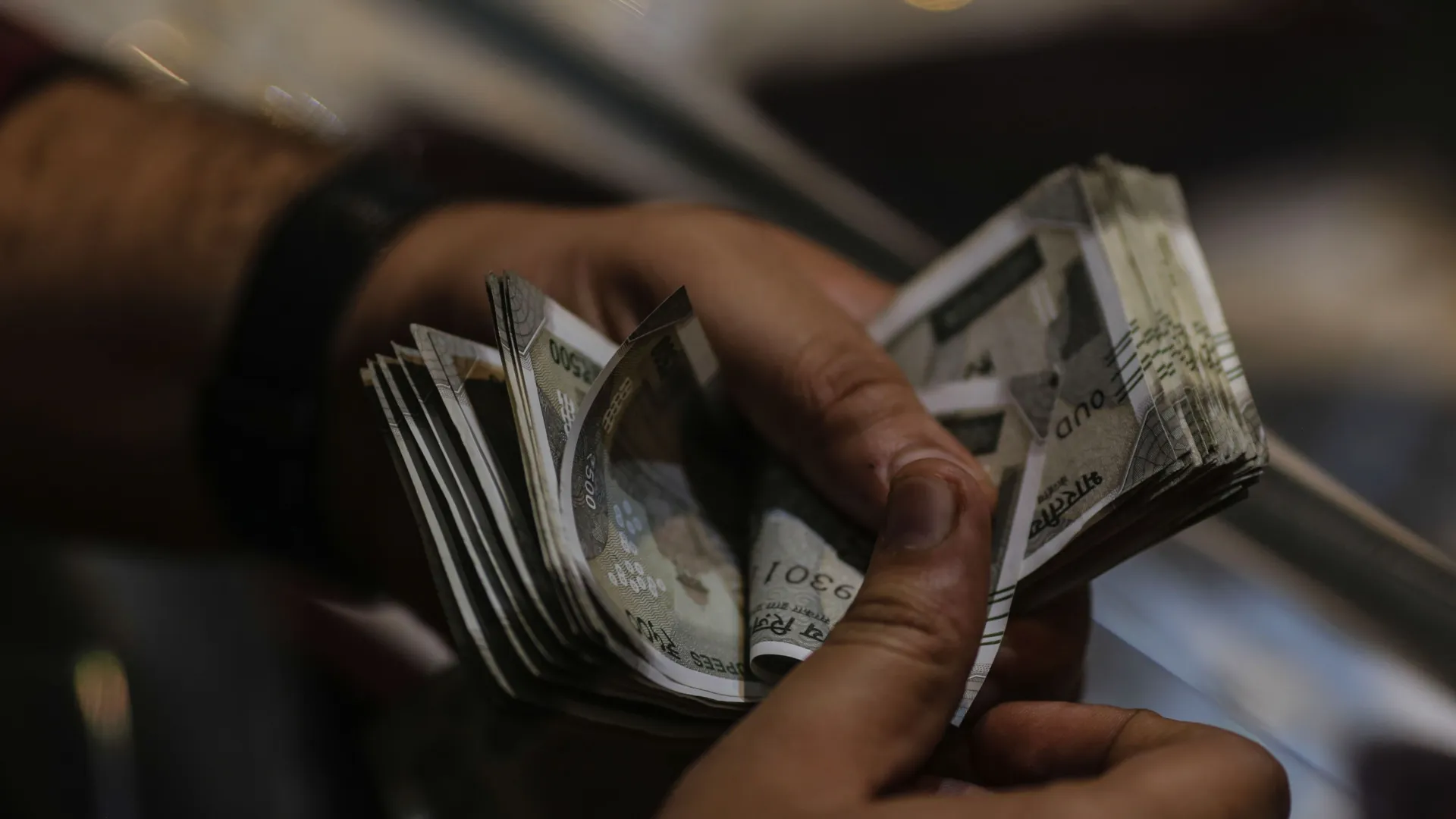
The Indian rupee strengthened approximately 1% against the U.S. dollar on October 12, 2026, following an intervention package by the Reserve Bank of India (RBI) designed to reduce dollar demand and contain volatility in Asia’s third-largest economy.
The currency advanced to approximately 95.77 per dollar from Friday’s close of 96.73, recording its strongest daily appreciation in roughly six months. The move followed measures announced on October 10 that took effect as Indian markets reopened on Monday.
The central bank’s response combines direct dollar provision to major oil importers with restrictions on rupee-linked foreign-exchange derivatives and additional reserve requirements for banks.
The significance extends beyond the immediate currency rebound. The RBI is attempting to influence not only the supply of dollars but also how businesses and financial institutions generate demand for them.
The intervention comes after sustained pressure on the rupee from elevated energy-import costs, portfolio outflows and expectations of further depreciation. Whether the currency can retain its gains will depend on whether the measures change those underlying pressures or primarily redistribute them across the financial system.
Removing Oil Importers From the Spot-Dollar Market
The most direct intervention is a special facility through which the RBI will meet the daily dollar requirements of three state-owned oil marketing companies: Indian Oil Corporation, Hindustan Petroleum Corporation and Bharat Petroleum Corporation.
Under the arrangement, effective October 12 and continuing until further notice, the RBI will sell dollars to these companies through designated banks.
The mechanism addresses a concentrated source of foreign-exchange demand.
India imports substantial quantities of crude oil, and international petroleum transactions are predominantly denominated in U.S. dollars. When oil prices rise, the dollar requirements of importers generally increase, creating additional pressure on the domestic currency.
By supplying dollars directly to the three companies, the RBI can reduce their need to obtain foreign currency through ordinary spot-market transactions.
That changes where the dollar demand is satisfied. It does not eliminate the economic requirement to pay for imported oil.
The distinction matters for assessing the intervention’s durability. The facility may reduce immediate pressure on market liquidity and limit abrupt exchange-rate movements, but the underlying import bill remains payable in foreign currency.
The RBI has not announced a fixed exchange-rate target or disclosed a predetermined aggregate dollar allocation for the facility.
Its effectiveness will therefore depend partly on the volume of dollar demand redirected, the availability of foreign-exchange reserves and the evolution of energy prices.
Derivatives Restrictions Change the Cost of Currency Protection
The second component targets demand generated through foreign-exchange hedging and derivative transactions.
The RBI has prohibited market participants from rebooking canceled rupee-linked foreign-exchange derivative contracts, whether deliverable or nondeliverable, with authorized dealers.
Existing rules permitting contracts to be rolled over at maturity remain applicable, subject to regulatory conditions.
The central bank has also reduced the threshold for certain foreign-exchange derivative transactions undertaken without establishing the underlying exposure from $100 million to $5 million.
The change substantially narrows the scope for positions that can be established without demonstrating the associated commercial or financial exposure.
A separate requirement introduces a Foreign Exchange Risk Reserve equal to 20% of the rupee-equivalent notional amount of qualifying transactions exceeding $2 million.
The reserve applies to specified rupee-linked derivative contracts used to hedge current-account exposures where the customer purchases foreign currency against the rupee.
This requirement can increase the cost of providing hedges because banks must commit cash against eligible transactions.
For corporate importers, the financial consequences may include higher forward-contract pricing, reduced access to certain hedging structures or changes in the timing of currency purchases.
The restrictions could reduce demand for forward dollars, particularly where companies had been increasing hedge positions in anticipation of further rupee depreciation.
However, they also create a potential trade-off.
A reduction in speculative or precautionary currency demand can stabilize near-term market conditions, while higher hedging costs may make it more expensive for companies to manage genuine foreign-currency liabilities.
The net effect on forward premiums is therefore not necessarily one-directional. Lower demand for dollar hedges may exert downward pressure, while additional bank funding and liquidity costs may work in the opposite direction.
The Market Response Is Significant but Not Conclusive
The rupee’s approximately 1% appreciation on October 12 represents a meaningful immediate market response.
The currency’s move from 96.73 to approximately 95.77 per dollar followed the introduction of the RBI’s measures, although contemporaneous intervention through state-owned banks may also have contributed, according to Reuters reporting citing market participants.
The observed appreciation should not be interpreted as proof that India’s external financing position has fundamentally improved.
The rupee had depreciated by more than 6% against the dollar during 2026 before Monday’s rebound.
Persistent foreign portfolio outflows have been another source of pressure. Reuters reported that foreign investors had withdrawn more than $30 billion from Indian equities during the year.
Those flows matter because they create demand for foreign currency independently of the country’s import requirements.
India’s foreign-exchange reserves had also declined from approximately $785 billion in September to around $734 billion as of October 2, according to figures cited in contemporaneous financial reporting.
Although reserves remain substantial in absolute terms, their deployment involves a balance between smoothing exchange-rate volatility and preserving external liquidity against future shocks.
A central bank can influence short-term market conditions through dollar sales and regulatory measures. Sustained exchange-rate stability, however, also depends on trade flows, investment movements, interest-rate differentials and broader confidence in the currency.
The October 12 rally establishes that the market responded strongly to the policy package. It does not yet establish a durable reversal of the rupee’s depreciation trend.
Implications for Banks, Importers and Foreign Investors
The intervention changes the distribution of foreign-exchange risk across several institutional participants.
For oil marketing companies, the dedicated dollar facility may reduce the operational uncertainty associated with obtaining foreign currency during periods of market stress.
For other importers, the picture is more complex.
A stronger rupee reduces the local-currency cost of dollar-denominated obligations at a given exchange rate. Yet the revised derivatives framework may increase the cost of protecting future payments against depreciation.
The combined effect will depend on each company’s existing hedge coverage, maturity profile and ability to pass higher costs through to customers.
Banks face a separate challenge.
The additional reserve requirement can tie up liquidity that might otherwise support lending or market-making activity. Banks may respond by adjusting prices, reducing certain exposures or changing the terms offered to corporate clients.
These adjustments could alter liquidity and pricing in India’s foreign-exchange derivatives market even if the spot rupee remains comparatively stable.
Foreign portfolio investors must evaluate both the exchange rate and the cost of managing currency exposure.
A stronger rupee can improve dollar-denominated returns on Indian assets when other factors remain unchanged. But higher hedging costs or reduced derivative-market flexibility can offset part of that benefit for investors who systematically hedge currency risk.
The policy package therefore has implications for cross-border capital allocation, not merely for the quoted USD/INR exchange rate.
The Test Is Whether Dollar Demand Falls Without Impairing Market Function
The RBI’s intervention addresses two related but distinct sources of currency pressure: immediate dollar purchases by large importers and additional demand generated through foreign-exchange derivatives.
Both measures can reduce pressure on the spot market, but neither directly reverses the economic forces that produced India’s higher import bill and sustained capital outflows.
The policy also introduces costs that will become clearer as banks and corporate customers adapt to the new requirements.
Market participants have raised concerns about the operational implementation and liquidity implications of the reserve framework. These issues are relevant because effective foreign-exchange risk management requires functioning derivatives markets as well as orderly spot-market trading.
A sustained improvement would require more than a stronger exchange rate over a single session.
Evidence of stabilization would include reduced pressure on dollar funding, orderly forward-market pricing, continued access to commercial hedging and an easing of the external flows that have weighed on the currency.
The RBI has demonstrated its willingness to intervene through both its balance sheet and regulatory authority. The October 12 appreciation indicates that the measures have already affected market behavior.
The longer-term financial question is whether India can stabilize the rupee while preserving efficient currency hedging and limiting the liquidity costs imposed on banks and businesses.
That balance—not the initial one-day rally—will determine the economic effectiveness of the intervention.
Important Information
This material was prepared by Wavelength Financial Content, an independent third-party content provider, and is published with the authorization of Quassar Capital, L.P. ("Quassar Capital"). Opinions expressed are as of the date of publication and are subject to change without notice. They do not necessarily reflect the views of Quassar Capital or its affiliates.
This material is provided for informational purposes only. It is not investment, legal, or tax advice, a recommendation to take any action or make any investment decision, or an offer to sell or a solicitation of an offer to purchase any security, financial product, or interest in an investment vehicle. Forward-looking statements, forecasts, and estimates are illustrative, subject to risks and uncertainties, and may not be realized. Past performance is not indicative of future results.
Information has been obtained from sources believed to be reliable but has not been independently verified, and no representation or warranty is made as to its accuracy or completeness. References to third-party companies, products, or trademarks are for identification only and do not imply sponsorship, affiliation, or endorsement. See the Disclosures and Terms of Use pages on this website for additional information.
© 2026 Quassar Capital, L.P. All rights reserved. Reproduction or distribution of this material, in whole or in part, is prohibited without the prior written consent of Quassar Capital.