
Wall Street Rebounds as Broad-Based Buying Reverses Previous Week’s Selloff
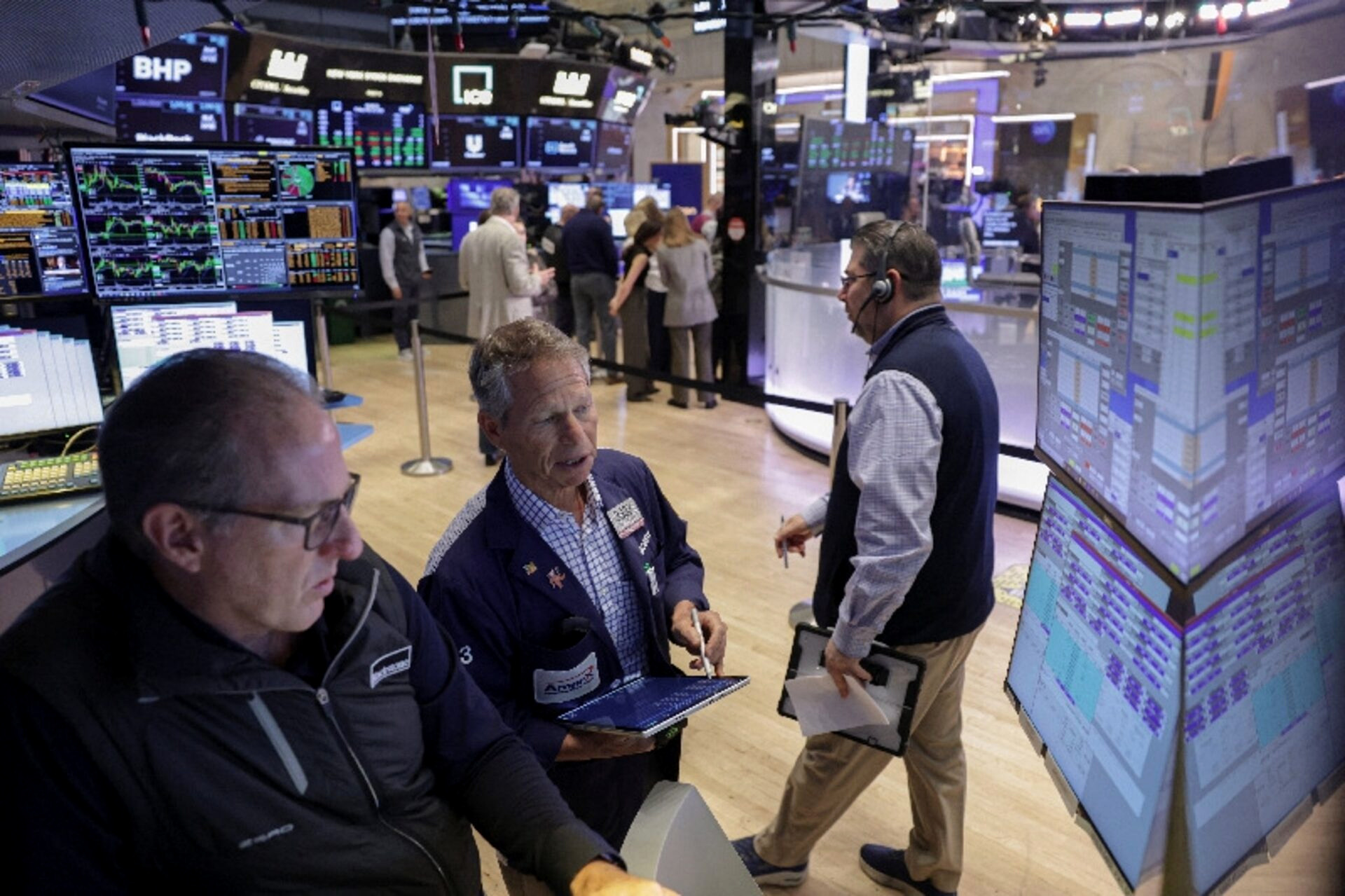
U.S. equities rallied on Monday, November 9, as investors reversed part of the previous week’s technology-led selloff, producing a broad recovery across major indexes and sectors.
The advance followed the S&P 500’s steepest weekly decline since April 2025 and marked a significant change in near-term market participation. All 11 major S&P 500 sectors moved higher, while advancing stocks substantially outnumbered declining issues on both the New York Stock Exchange and Nasdaq.
The session’s significance extended beyond the magnitude of the index gains. It provided evidence of a wider recovery in risk appetite, even as investors continued to assess the implications of elevated financing costs, inflation uncertainty and valuations following the preceding week’s decline.
Major Indexes Recover as Market Breadth Improves
According to a Reuters market update published at 2:26 p.m. Eastern Time on November 9, the Dow Jones Industrial Average advanced 2.21%, or 1,131.81 points, to 52,417.54 points.
The S&P 500 gained 2.41%, or 177.81 points, to 7,554.67 points, while the Nasdaq Composite rose 2.67%, or 656.06 points, to 25,235.49 points.
These figures are intraday observations and do not represent official closing levels.
The recovery extended across all 11 major S&P 500 sectors, with industrials and consumer discretionary shares each gaining more than 3%.
Advancing issues outnumbered declining stocks by approximately 4.46 to one on the New York Stock Exchange and 3.56 to one on Nasdaq, according to the same Reuters update.
The breadth of the advance is important because it distinguishes a wider market recovery from a rally concentrated in a small number of heavily weighted companies.
When gains extend across multiple industries, they can indicate a broader reassessment of risk rather than isolated buying in the largest index constituents.
Nevertheless, a single session of positive breadth does not establish that underlying earnings expectations or financial conditions have improved sufficiently to sustain the recovery.
Repricing After a Concentrated Technology Selloff
The rebound followed a period of selling pressure that had been particularly pronounced in technology and semiconductor shares.
The Philadelphia Semiconductor Index advanced more than 6% during Monday’s session after declining more than 12% over the preceding week, according to Reuters.
That reversal illustrates the speed with which market positioning can change after a concentrated decline.
The recovery may reflect a reassessment of valuations, reduced selling pressure or renewed willingness to assume exposure to companies affected by the previous week’s volatility.
These explanations are not mutually exclusive, and the available intraday data do not establish their relative contributions.
More broadly, the rebound highlights the distinction between short-term market positioning and longer-term financial fundamentals.
A sharp recovery in share prices does not necessarily indicate a corresponding improvement in earnings forecasts, capital expenditure returns or financing conditions.
For institutional market analysis, the relevant issue is whether a change in market participation is accompanied by durable adjustments in expected corporate cash flows and the cost of capital.
Falling Oil Prices Provide Near-Term Relief
The decline in crude oil prices contributed to the improvement in market sentiment by easing one source of near-term inflation pressure.
Oil retreated as investors assessed indications of potential de-escalation involving Iran, reducing some immediate concerns about further disruptions to energy supplies.
Lower energy prices can influence equity markets through several channels.
For fuel-intensive businesses, sustained reductions in input costs may support operating margins, depending on competitive conditions and the extent to which savings are retained.
For consumers, lower energy costs can ease pressure on household expenditures and potentially support spending in other categories.
At the macroeconomic level, declining crude prices can moderate certain components of headline inflation, although the effects depend on the persistence of the move and its transmission to refined products and consumer prices.
The relationship with monetary policy is less direct.
A single-session decline in oil prices does not establish a lasting reduction in underlying inflation or a change in the Federal Reserve’s policy outlook.
The development therefore provided near-term relief without resolving broader uncertainty surrounding inflation and interest rates.
Interest-Rate Expectations Remain a Constraint
Monday’s recovery occurred against a monetary-policy backdrop that continued to present challenges for equity valuations.
Stronger-than-expected U.S. employment data released on November 6 had reinforced expectations that the Federal Reserve could raise interest rates in December.
In a Reuters market report published at 1:35 p.m. Eastern Time on November 9, traders were pricing approximately an 80% probability of a quarter-percentage-point increase at the December meeting.
That figure represented a market-implied probability at the time of publication, not a confirmed future policy decision.
The coexistence of falling oil prices and expectations of additional monetary tightening illustrates the complexity of the inflation outlook.
Energy prices can reduce immediate pressure on headline inflation while labor-market conditions and other price components continue to influence expectations for monetary policy.
For equities, higher expected interest rates can increase the discount rates applied to future earnings and raise financing costs for capital-intensive businesses.
Those effects may be particularly relevant for companies whose valuations depend on earnings expected further into the future.
Consequently, the strength of Monday’s advance should be assessed alongside the monetary conditions that continue to shape corporate financing and asset valuations.
Weekly Market Intelligence: Breadth as the Defining Signal
The November 9 session marked a meaningful reversal of the selling pressure that had affected U.S. equities during the previous week.
Its defining feature was the breadth of participation.
All 11 S&P 500 sectors advanced, market internals improved and semiconductor shares recovered substantially from their recent decline.
Together, these developments indicated a broader reassessment of market exposure rather than a recovery confined to a narrow group of companies.
Falling crude oil prices provided additional support by easing one source of inflation concern. However, expectations of a potential December interest-rate increase continued to limit the extent to which the rally could be interpreted as an improvement in underlying financial conditions.
The October Consumer Price Index, scheduled for release on November 10, will provide another test of inflation expectations and the outlook for monetary policy.
The durability of the equity recovery will ultimately depend on whether broader participation is supported by earnings expectations, financing conditions and subsequent economic data.
Monday’s advance demonstrated renewed willingness to assume equity risk following a concentrated selloff. Whether that change in positioning develops into a sustained recovery remains dependent on fundamentals that a single trading session cannot establish.
Important Information
This material was prepared by Wavelength Financial Content, an independent third-party content provider, and is published with the authorization of Quassar Capital, L.P. ("Quassar Capital"). Opinions expressed are as of the date of publication and are subject to change without notice. They do not necessarily reflect the views of Quassar Capital or its affiliates.
This material is provided for informational purposes only. It is not investment, legal, or tax advice, a recommendation to take any action or make any investment decision, or an offer to sell or a solicitation of an offer to purchase any security, financial product, or interest in an investment vehicle. Forward-looking statements, forecasts, and estimates are illustrative, subject to risks and uncertainties, and may not be realized. Past performance is not indicative of future results.
Information has been obtained from sources believed to be reliable but has not been independently verified, and no representation or warranty is made as to its accuracy or completeness. References to third-party companies, products, or trademarks are for identification only and do not imply sponsorship, affiliation, or endorsement. See the Disclosures and Terms of Use pages on this website for additional information.
© 2026 Quassar Capital, L.P. All rights reserved. Reproduction or distribution of this material, in whole or in part, is prohibited without the prior written consent of Quassar Capital.